Simple Nutrition Goals for Busy People
Eating well sounds easy until Tuesday happens.
You oversleep. Work gets busy. Lunch becomes an afterthought. By 4 p.m., you're starving and eating whatever happens to be closest.
That's normal life.
The answer isn't a perfect meal plan or spending Sunday cooking 21 matching containers of chicken and broccoli.
A better approach is to set simple nutrition goals you can actually keep, even when your schedule gets messy.
Start with one goal
Don't try to change your entire diet on Monday.
Pick one thing.
Maybe you want to eat vegetables with dinner. Maybe you're trying to drink more water. Maybe you want to stop skipping lunch.
Choose one goal and practice it for a couple of weeks.
Once it feels normal, add another.
Small changes aren't exciting.
They work.
1. Eat something with protein at each meal
Protein can help make meals more satisfying and supports muscle maintenance and repair.
You don't need to calculate every gram.
Simply include a protein-rich food at meals when possible.
That could be:
Eggs
Fish
Chicken
Beans
Lentils
Tofu
Greek yogurt
Cottage cheese
Nuts or seeds
Breakfast might be eggs and toast.
Lunch could be a chicken sandwich.
Dinner might be rice, vegetables, and beans.
Keep it simple.
2. Add one fruit or vegetable
If your current diet doesn't contain much produce, don't suddenly promise yourself nine servings a day.
Start with one.
Add a banana to breakfast.
Put tomatoes on your sandwich.
Have carrots with lunch.
Add frozen broccoli to dinner.
Once that becomes easy, add another.
You're building a pattern, not trying to win a vegetable competition.
3. Keep water nearby
Busy people often don't realize they've barely had anything to drink until late afternoon.
Keep a reusable bottle somewhere visible.
Your desk works.
Your bag works.
The kitchen counter works.
Drink regularly throughout the day and with meals.
Your individual fluid needs can change based on your body, activity, climate, medications, and health conditions, so you don't need to chase an arbitrary number just because someone online told you to.
4. Stop skipping lunch
Skipping lunch might save 20 minutes.
Then 4 p.m. arrives.
You're hungry, tired, irritated, and suddenly the office vending machine has become your personal chef.
If you regularly miss lunch, make eating lunch the goal.
It doesn't need to be impressive.
A sandwich with fruit.
Leftovers.
Soup and whole-grain toast.
Yogurt, fruit, and nuts when you're really stuck.
A simple meal is usually better than no meal followed by desperate snacking.
5. Build a backup breakfast
Mornings go wrong.
Your alarm doesn't go off. Someone can't find their shoes. Traffic is terrible. You have an early meeting.
Have a breakfast that requires almost no thought.
Try:
Greek yogurt + fruit
Oatmeal + nuts
Whole-grain toast + peanut butter
Eggs + fruit
Overnight oats
Keep the ingredients available.
Your backup breakfast should be so easy that you can make it while half awake.
6. Keep healthy snacks within reach
Hunger doesn't care about your calendar.
Keep a few easy options nearby.
Try fruit, nuts, yogurt, cheese, hummus, whole-grain crackers, roasted chickpeas, or vegetables.
Keep shelf-stable options in your desk or bag when practical.
The trick is simple:
Make the better choice the easy choice.
7. Use frozen vegetables
Frozen vegetables are one of the best tools for busy people.
They don't need washing.
They don't need chopping.
And they won't turn into an expensive science experiment in the back of your refrigerator after four days.
Heat them and add them to rice, pasta, eggs, soup, or whatever you're already making.
Dinner just got easier.
8. Make one meal do double duty
You don't need to meal-prep your entire week.
Just cook a little extra.
If you're making chicken and vegetables for dinner, make enough for tomorrow's lunch.
Cooking chili?
Make several portions.
Making rice?
Cook extra.
Tomorrow's lunch is now sitting in the refrigerator instead of waiting to become another decision.
9. Keep a few emergency meals
Every kitchen needs food for nights when nobody wants to cook.
Think:
Eggs and whole-grain toast
Canned beans with rice
Frozen vegetables with eggs
Tuna with whole-grain crackers and vegetables
Soup with whole-grain bread
Simple pasta with vegetables and protein
These meals aren't glamorous.
That's fine.
They're there to save you from the 8:30 p.m. moment when you're exhausted, hungry, and staring into an empty refrigerator.
10. Make half your plate produce when practical
You don't need to measure every vegetable.
Use your plate.
When it fits the meal, make a generous portion vegetables or fruit.
Then add a protein source and a grain, potato, or other carbohydrate.
It won't work perfectly for every meal.
That's okay.
A bowl of soup doesn't need to be reconstructed on three separate sections of a plate to count as dinner.
Use the idea as a guide, not a law.
11. Choose whole grains more often
You don't need to ban white bread or regular pasta.
Try choosing whole-grain options more often.
Whole-grain bread.
Oatmeal.
Brown rice.
Whole-wheat pasta.
Barley.
Quinoa.
These foods can help increase your fiber intake.
Start with foods you already eat rather than buying a cupboard full of unfamiliar ingredients.
12. Set a fiber goal gradually
Fiber supports digestive health and can help make meals more satisfying.
Good sources include beans, lentils, vegetables, fruits, whole grains, nuts, and seeds.
If your current diet is low in fiber, increase it gradually.
Going from almost no fiber to a giant bowl of beans, bran cereal, chia seeds, and raw vegetables overnight can make your digestive system extremely unhappy.
Give your body time to adjust.
Drink adequate fluids too.
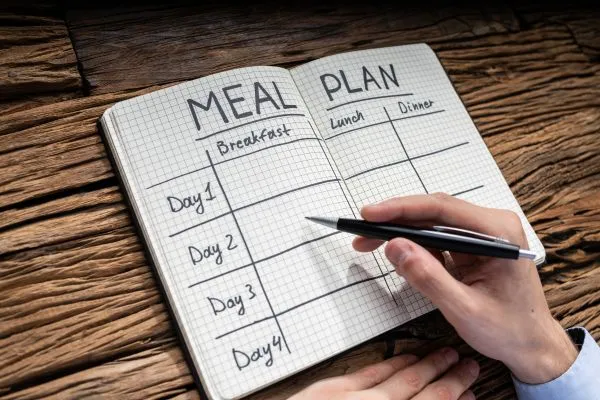
13. Plan three dinners, not seven
Meal planning often fails because people make it too ambitious.
You don't need to know exactly what you'll eat next Saturday.
Plan three dinners.
Buy what you need.
Use leftovers on another night.
Keep an emergency meal available.
Leave room for plans to change.
That's usually enough structure to stop every evening from beginning with:
"What are we going to eat?"
14. Put nutritious foods where you can see them
Your environment matters.
Put fruit on the counter.
Keep washed vegetables near the front of the refrigerator.
Put yogurt where it's easy to grab.
Keep nuts in your desk.
Meanwhile, foods hidden behind other things are surprisingly easy to forget.
I’ve bought berries with excellent intentions and found them several days later looking like a failed biology experiment.
Visibility helps.
15. Don't drink all your calories without noticing
Coffee drinks, sodas, sweetened teas, energy drinks, and other beverages can add a surprising amount of sugar and calories without being very filling.
You don't have to eliminate everything you enjoy.
Just pay attention.
Try water, sparkling water, unsweetened tea, or coffee with less added sugar more often.
A drink doesn't need to taste like punishment to be a better choice.
16. Make eating easier, not stricter
Busy people don't need more food rules.
They need fewer decisions.
Keep five breakfasts you like.
Five lunches.
Five easy dinners.
A handful of snacks.
Rotate them.
You don't need 75 healthy recipes saved on your phone.
You need to know what you're eating tonight.
17. Eat before you're desperately hungry
Extreme hunger makes thoughtful food choices much harder.
If you know dinner won't happen until late, have a snack.
Fruit and nuts.
Yogurt.
Cheese and crackers.
Hummus and vegetables.
Something small can prevent you from arriving home so hungry that you start eating while deciding what to eat.
We've all been there.
18. Slow down when you can
Busy schedules can turn meals into races.
Try sitting down.
Put your phone away for the first few minutes.
Taste your food.
Notice when you're becoming satisfied.
You don't need a 45-minute mindful lunch.
Even slowing down for the first five minutes can make a meal feel less like another task.
19. Use SMART nutrition goals
“Eat healthier” isn't much of a goal.
It's too vague.
Try:
“I'll bring lunch from home three days this week.”
Or:
“I'll add a vegetable to dinner five nights this week.”
Or:
“I'll eat fruit with breakfast Monday through Friday.”
Now you know exactly what you're trying to do.
That's much easier to track.
20. Have a bad-day version of your nutrition plan
This might be the most important goal.
Decide what eating reasonably well looks like when the day completely falls apart.
Maybe your bad-day plan is:
Breakfast: Banana and yogurt.
Lunch: Store-bought sandwich and fruit.
Snack: Nuts.
Dinner: Eggs, frozen vegetables, and toast.
Is it a gourmet wellness menu?
No.
Does it keep one chaotic day from turning into a week of skipped meals and takeout?
It can.
Don't try to eat perfectly
One restaurant meal doesn't ruin your diet.
Neither does birthday cake.
Neither does pizza on Friday night.
Nutrition is about what you do repeatedly.
If most of your meals contain nutritious foods and you're eating in a way that supports your health, there's room for foods you eat simply because you enjoy them.
Food isn't a morality test.
A simple weekly nutrition goal
If you want somewhere to start, try this for the next week:
Breakfast: Include protein or fruit each morning.
Lunch: Eat a real meal instead of regularly skipping it.
Dinner: Add a vegetable.
Snacks: Keep two easy, filling options available.
Drinks: Keep water nearby throughout the day.
That's enough.
You don't need 20 new rules.
Know when your needs are different
General nutrition advice doesn't work for everyone.
Pregnancy, diabetes, kidney disease, digestive disorders, food allergies, eating disorders, certain medications, and other health situations can change what an appropriate diet looks like.
If you have specific medical or nutrition needs, work with a doctor or registered dietitian rather than following a generic eating plan from the internet.
Personal needs matter.
Make healthy eating easier on your busiest day
Anyone can make a beautiful salad when they have two free hours.
The real test happens when you get home late, you're tired, and there's almost nothing in the fridge.
That's why simple goals work.
Keep frozen vegetables around.
Have a backup meal.
Pack a snack.
Eat lunch.
Cook extra when you can.
Don't try to fix your entire diet this week.
Pick one nutrition goal that's small enough to survive your busiest day.
Then repeat it until it becomes normal.
That's how eating better starts to stick.