
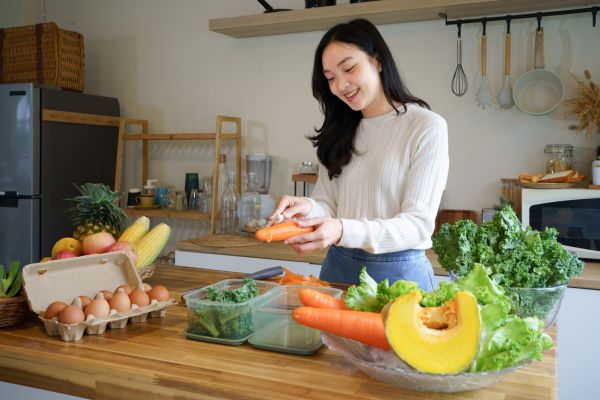
How to Set Fruit and Vegetable Goals
Eating more fruits and vegetables sounds simple until real life gets in the way.
You’re busy. You forget to buy them. The vegetables in the fridge go bad. Or you get home tired and decide that toast for dinner is good enough.
The answer isn’t a perfect meal plan.
It’s setting a fruit and vegetable goal that fits your actual life.
Start with where you are
Before setting a goal, look at what you already eat.
For a few days, notice how often you have fruit and vegetables at meals and snacks. Don’t change anything yet.
Maybe you discover that you eat fruit most mornings but almost no vegetables at lunch. Or perhaps dinner is loaded with vegetables while breakfast and snacks contain none.
That information matters.
You can’t set a useful goal if you don’t know your starting point.
Set a simple daily target
A common nutrition goal is to make fruits and vegetables a regular part of meals throughout the day.
Instead of obsessing over one exact number, start with a goal you can repeat.
For example:
Beginner goal: Have a fruit or vegetable at two meals each day.
Next step: Include one at three meals.
Stronger goal: Add fruit or vegetables to meals and snacks throughout the day.
The right target depends on your current diet, appetite, calorie needs, health goals, and medical needs.
If you currently eat one serving a day, jumping straight to a huge target can make the habit feel like punishment.
Start smaller.
Think in portions, not perfection
You don't need to weigh every strawberry or measure every carrot.
A practical approach is to think about what a serving looks like.
For many fruits and vegetables, about one cup of chopped or whole produce is a useful rough guide. Leafy greens are different because they take up more space for the same amount of food.
You can also use your plate as a guide.
Try making a large part of your meal vegetables or fruit, depending on the meal.
No calculator required.
Add fruit to breakfast
Breakfast is an easy place to build the habit.
Try berries in oatmeal, a banana with peanut butter, sliced mango with yogurt, or an apple alongside eggs and toast.
If mornings are rushed, keep fruit where you can see it.
A bowl of bananas on the counter is much easier to remember than berries hidden behind three containers in the refrigerator.
And yes, visibility matters.
Make vegetables easier at lunch
Lunch is where many people lose the battle.
A sandwich and chips can disappear quickly without a single vegetable.
Add sliced tomatoes, cucumber, lettuce, peppers, or spinach to your sandwich. Put carrots or snap peas beside your meal. Add leftover roasted vegetables to rice or pasta.
You don't need a giant salad.
A handful of vegetables still moves you closer to your goal.
Build vegetables into dinner
Dinner is usually the easiest meal for adding vegetables because they can become part of the main dish.
Try adding:
Spinach to eggs, pasta, or soup
Broccoli to stir-fries
Mushrooms to rice or pasta
Bell peppers to tacos
Carrots to soups and stews
Zucchini to pasta dishes
Tomatoes to salads, sauces, and sandwiches
Frozen vegetables count too.
In fact, frozen produce can be one of the smartest options for busy households because it keeps for months and requires little preparation.
Use fruit as a snack
Fruit can replace some highly processed snack foods without requiring much preparation.
Keep easy choices nearby:
Apples
Bananas
Oranges
Grapes
Pears
Berries
Melon
Pair fruit with something containing protein or fat when you want a more filling snack.
For example, try an apple with peanut butter or berries with plain yogurt.
That combination can keep you satisfied longer than fruit alone.
Keep frozen and canned options around
Fresh produce is great.
But fresh isn't the only option.
Frozen vegetables can be steamed in minutes. Frozen berries work well in smoothies or oatmeal. Canned tomatoes can become a quick pasta sauce. Canned fruit packed in water or its own juice can be useful when fresh fruit isn't available.
Read the label when buying canned vegetables or fruit.
For canned vegetables, look for lower-sodium options when possible. For canned fruit, choose options without a lot of added sugar.
The best produce is often the produce you actually eat.
Try different colors
One easy goal is to increase variety.
Instead of eating the same vegetable every day, look for different colors across the week.
Green spinach.
Orange carrots.
Red peppers.
Purple cabbage.
Yellow squash.
Blueberries.
Color isn't a perfect measure of nutrition, but eating a wider variety of produce helps you get different vitamins, minerals, and plant compounds.
Make variety the goal.
Not a perfect rainbow on every plate.
Set weekly goals, not just daily goals
Some people do better with a weekly target.
For example, you might choose five different vegetables and three different fruits to eat during the week.
This gives you flexibility.
If Tuesday is chaotic and you barely eat any vegetables, you don't have to declare the entire week a failure.
You simply make a better choice at the next meal.
That makes the habit much easier to maintain.
Prepare a few things ahead of time
You don't need to spend your entire Sunday meal-prepping.
Just make healthy choices easier to grab.
Wash grapes. Cut carrots. Slice peppers. Portion berries. Keep frozen vegetables ready for quick meals.
One small preparation session can save you several decisions later.
I’ve seen people buy a beautiful basket of fresh produce on Sunday and throw half of it away the following weekend because nothing was ready to eat.
Buying healthy food isn't enough.
Make it convenient.
Use the “add, don’t just remove” rule
Instead of telling yourself, “I can't eat chips,” try adding something first.
Have an apple with your afternoon snack.
Add vegetables to your sandwich.
Put berries on your breakfast.
Add a side salad to lunch.
This approach feels less restrictive and can make healthy eating easier to stick with.
Set SMART fruit and vegetable goals
A vague goal sounds like this:
“I need to eat healthier.”
A better goal is:
“I’ll add one serving of fruit to breakfast every weekday this month.”
Or:
“I’ll eat a vegetable with lunch and dinner at least five days a week.”
Your goal should be:
Specific: You know exactly what you’re doing.
Measurable: You can tell whether you did it.
Realistic: It fits your schedule and budget.
Relevant: It supports your health goal.
Time-based: You have a period for practicing it.
Simple goals are easier to repeat.
Track your progress without becoming obsessed
A small checklist on your phone or refrigerator can help.
Mark each day you meet your goal.
You could track:
☐ Fruit at breakfast
☐ Vegetable at lunch
☐ Vegetable at dinner
☐ Fruit or vegetable snack
That's enough.
You don't need to track every gram of food unless a healthcare professional has given you a specific reason to do so.
The goal is awareness, not perfection.
Don't forget the frozen vegetables
This deserves another mention because people often overlook it.
Frozen vegetables can save dinner on nights when you have no energy.
Imagine getting home at 7 p.m. with nothing planned.
You cook some rice, scramble a couple of eggs, and heat a bag of frozen mixed vegetables.
Not fancy.
Still a decent meal.
That kind of backup food can keep a busy week from turning into seven nights of takeout.
What about fruit juice?
Whole fruit is generally a better everyday choice than juice because whole fruit contains fiber and takes longer to consume.
Juice can fit into a balanced diet, but it shouldn't be the main way you try to meet your fruit goal.
If your goal is to eat more fruit, reach for the orange before the orange juice when you can.
Make your goal fit your budget
Eating more produce doesn't have to mean buying expensive specialty foods.
Choose what's in season. Compare prices between fresh and frozen options. Buy larger bags of produce you know you'll use.
Beans, cabbage, carrots, bananas, apples, oranges, and frozen vegetables can be budget-friendly staples in many grocery stores.
Don't let an Instagram-perfect grocery haul convince you that healthy eating requires a refrigerator full of expensive berries.
It doesn't.
Give yourself a backup plan
Every good goal needs a plan for bad days.
If you don't have fresh vegetables, use frozen.
If you forgot breakfast, grab a banana.
If dinner falls apart, add a side of canned vegetables to whatever you can make.
If you miss your goal one day, continue the next day.
One missed meal doesn't erase your progress.
A simple 7-day fruit and vegetable goal
If you want somewhere to start, try this:
Days 1–2: Add one fruit to breakfast.
Days 3–4: Add a vegetable to lunch.
Days 5–6: Add a vegetable to dinner.
Day 7: Review what worked and choose your next goal.
Don't increase everything at once.
Build the habit first.
The goal is consistency
You don't need to eat a perfect diet to eat more fruits and vegetables.
Start with one meal.
Then another.
Keep easy options at home. Use frozen produce when needed. Buy foods you actually enjoy. Track your progress if that helps.
And when you have a day where lunch is a sandwich and dinner is pizza?
Move on.
The point isn't to win every meal.
It's to make fruits and vegetables a normal part of your everyday life.
That's a goal worth keeping.